
How to Care for Ball Pythons
A practical, welfare-first care guide based on how we keep our own animals, covering enclosures, temperature, humidity, feeding, handling, health, and maintenance.
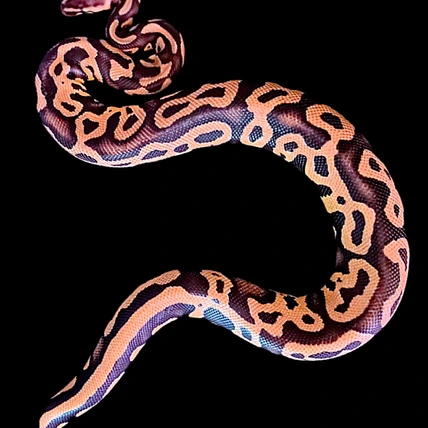
Overview
Ball pythons (Python regius) are a small, ground-dwelling constrictor native to the grasslands and forest edges of west and central Africa. Adults typically reach 3 to 5 feet, with mature females generally larger and heavier than males. With consistent husbandry they regularly live 25 to 30+ years in captivity.
They are a famously calm, slow-moving species that does best when their enclosure provides clear thermal options, secure hiding, and predictable routines. The goal of this guide is a setup that lets a ball python self-regulate temperature and humidity without constant intervention from the keeper.
Enclosure Setup
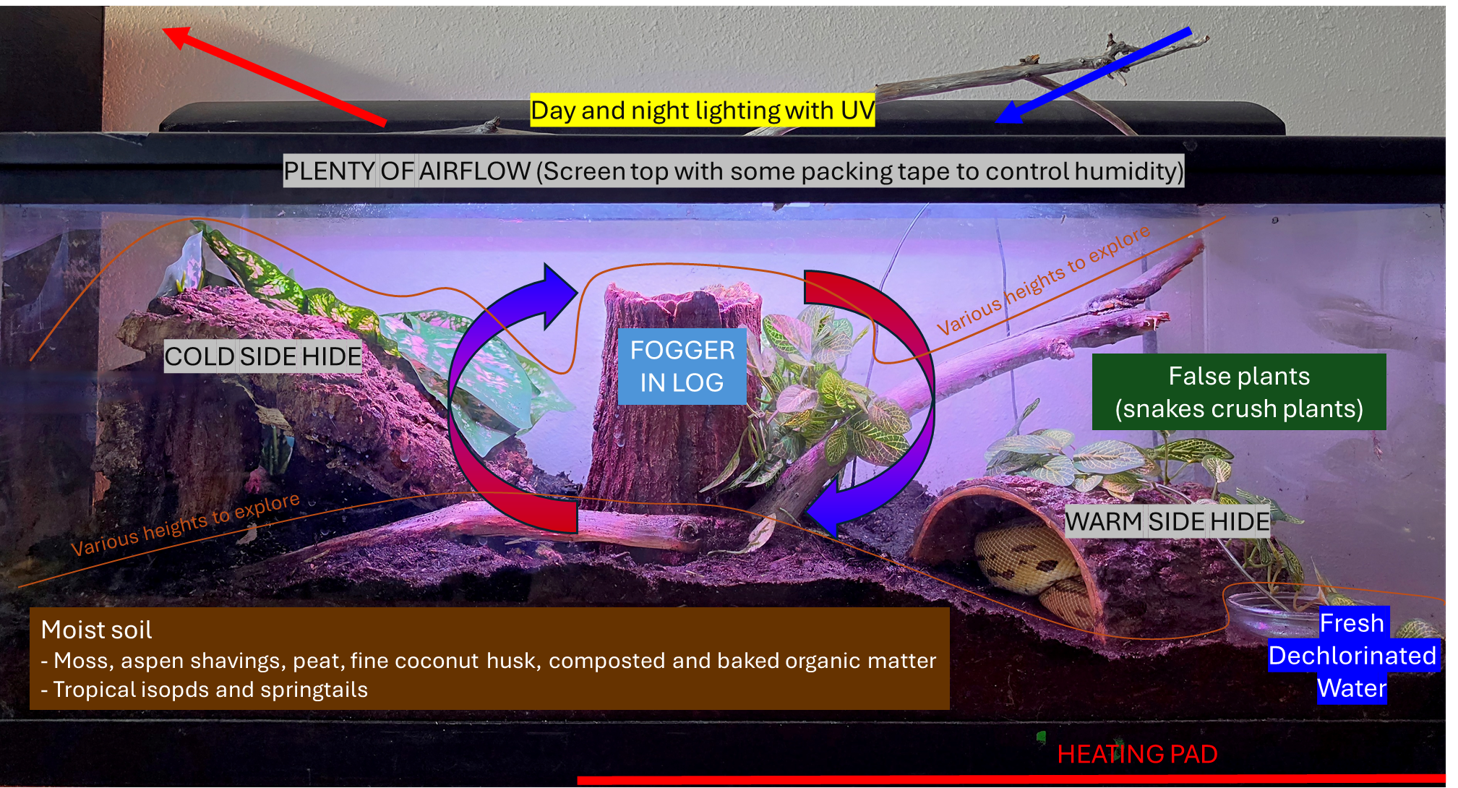
Ball pythons are reclusive ambush predators. They feel safest in an enclosure that holds heat and humidity well, offers two tight-fitting hides (one on the warm side, one on the cool side), and has a secure lid or front-opening doors. PVC, sealed wood, and front-opening reptile enclosures hold humidity dramatically better than open-top screen tanks.
Hatchlings can be kept in a 20-gallon equivalent (roughly 30" x 12") to help them feel secure. Sub-adults move into 36" enclosures. Adults should be housed in an enclosure of at least 4' x 2' x 1', with larger footprints preferred for adult females.
Every enclosure should include:
- Two snug hides; the snake's body should touch the sides and top
- Climbing branches or sturdy decor for enrichment and shedding
- A water bowl large enough to soak in, placed on the cool side
- A thermostat-controlled heat source (under-tank heater, radiant heat panel, or deep heat projector)
- An accurate digital thermometer and hygrometer at each end
- A locking or latching lid; ball pythons are stronger and more persistent than they look
Temperature Gradient
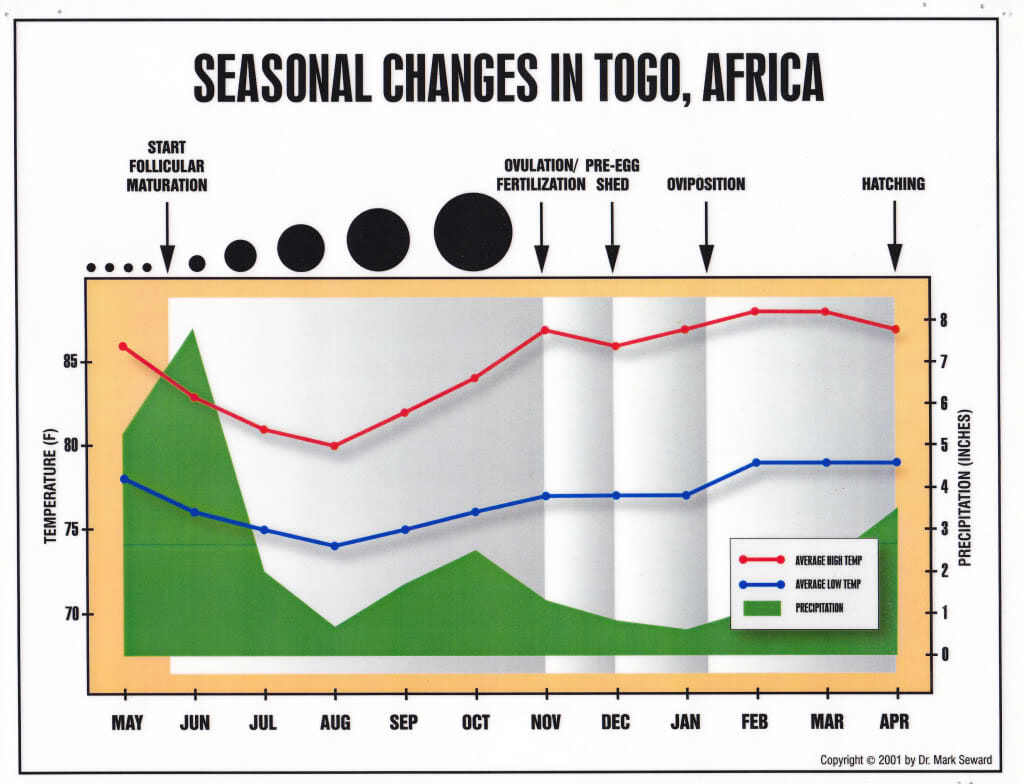
Ball pythons are ectotherms and rely entirely on a thermal gradient to digest food, fight infection, and regulate behavior. Always control heat with a quality thermostat. Unregulated heat sources cause burns and fatalities every year.
- Warm side surface
- 88–92 °F (31–33 °C)
- Warm side ambient
- 82–86 °F (28–30 °C)
- Cool side ambient
- 76–80 °F (24–27 °C)
- Nighttime drop
- No lower than 72 °F (22 °C)
Measure surface temperature directly on the basking spot with an infrared temperature gun, and monitor ambient temperatures with digital probes at each end of the enclosure. If the cool side is sitting above the mid-80s, the snake has nowhere to thermoregulate.
Humidity & Shedding Support
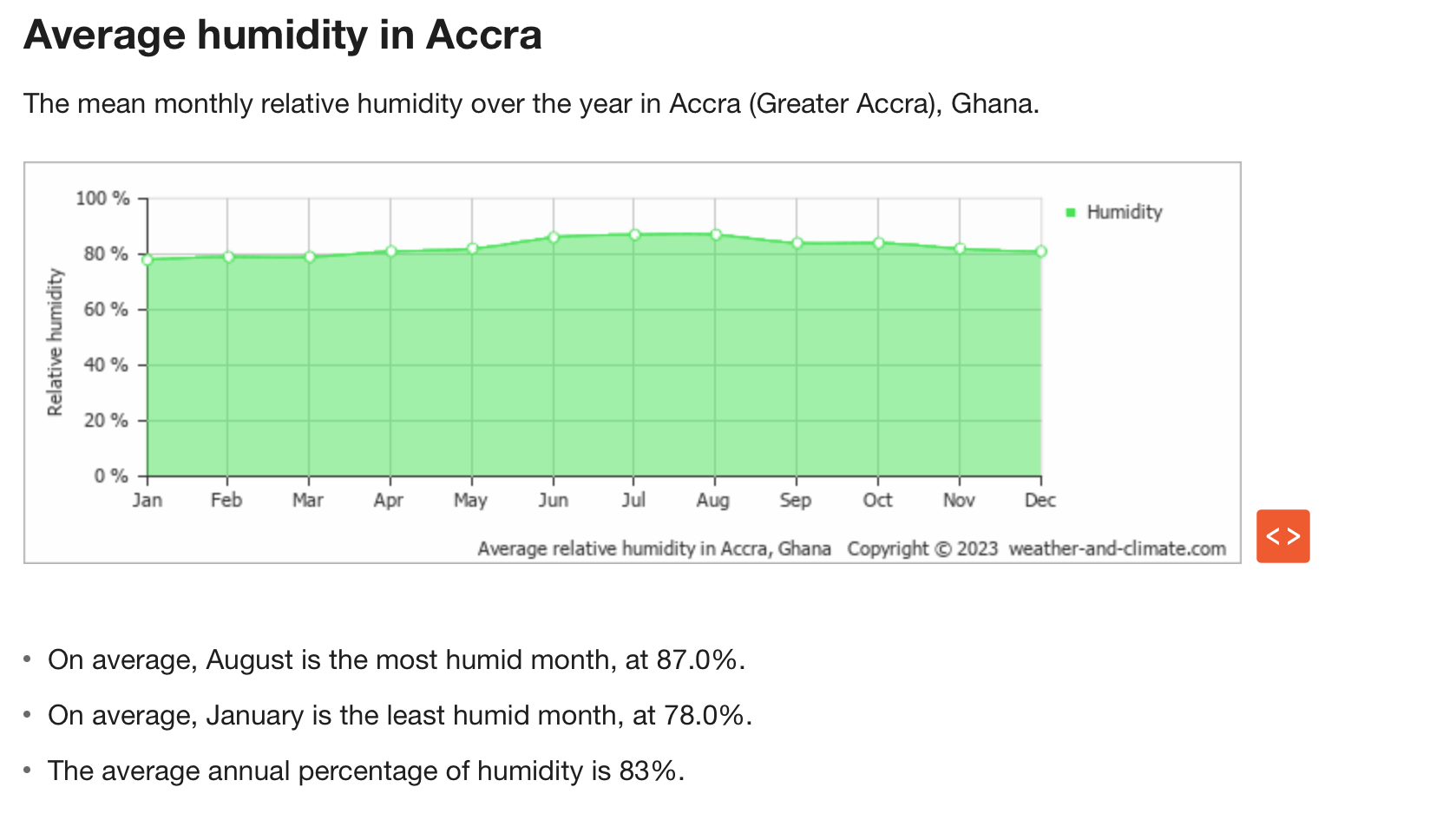
Maintain ambient humidity between 55% and 65% during normal periods, and raise it to 70%–80% during a shed cycle. Sustained humidity above 80% combined with poor airflow encourages scale rot and respiratory infection. High humidity is a tool, not a default.
Signs that a shed is approaching include dull coloration, a milky-blue cast over the eyes, and a brief return to clear coloration just before shed. Add a humid hide (a covered container with damp sphagnum moss) during this window. A clean, complete shed in one piece, including the eye caps, is the goal.
If a shed comes off in patches:
- Soak the snake in shallow, lukewarm water for 10–15 minutes
- Gently work stuck shed loose with a damp washcloth
- Always confirm both eye caps came off; retained eye caps need attention
- Re-evaluate enclosure humidity, ventilation, and water bowl size before the next cycle
Substrate Options
Substrate choice affects humidity, cleanliness, and how natural the enclosure feels. There is no single best option; pick the one that fits the enclosure type and the keeper's maintenance routine.
- Cypress mulch
- Holds humidity well, looks natural, easy to spot-clean. Watch for sharp pieces near the eyes.
- Coconut husk / coir
- Excellent humidity retention, soft, takes well to bioactive setups. Can pack down over time.
- Aspen shavings
- Clean, light, easy to burrow in. Poor humidity retention; molds quickly if it gets wet.
- Reptile bark / orchid bark
- Attractive, durable, holds humidity. Larger pieces can be ingested if the snake strikes near substrate.
- Bioactive living soil
- Composted and baked organic matter blended for a living soil composition. Supports beneficial microfauna, holds humidity beautifully, and breaks down waste in a planted bioactive setup. Bake or heat-treat any organic matter before use to neutralize pests and pathogens.
- Substrate mix
- A blend of the options above (for example cypress mulch with coconut coir, or bioactive soil cut with orchid bark) often outperforms any single substrate. Mixing lets you tune humidity retention, structure, and burrowing feel to the specific enclosure.
- Paper towel / butcher paper
- Best for quarantine, hatchlings, or sick animals, and a strong default for babies because problems are easy to spot. Trivial to change and provides no enrichment. Replace any sheet that becomes damp; paper towels should never stay wet for more than 12 hours, as prolonged moisture against the belly drives scale rot.
Clean Up Crew
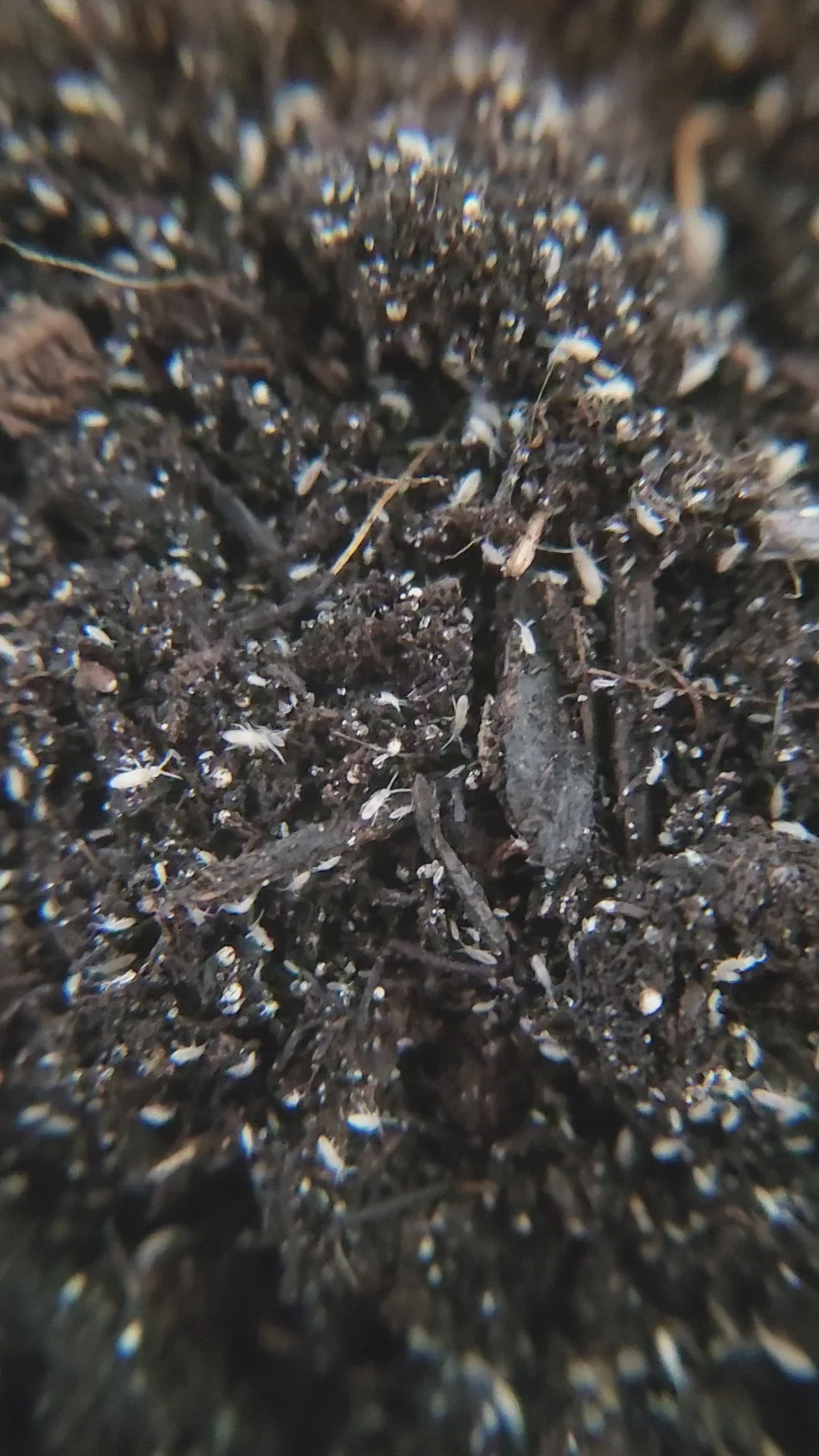
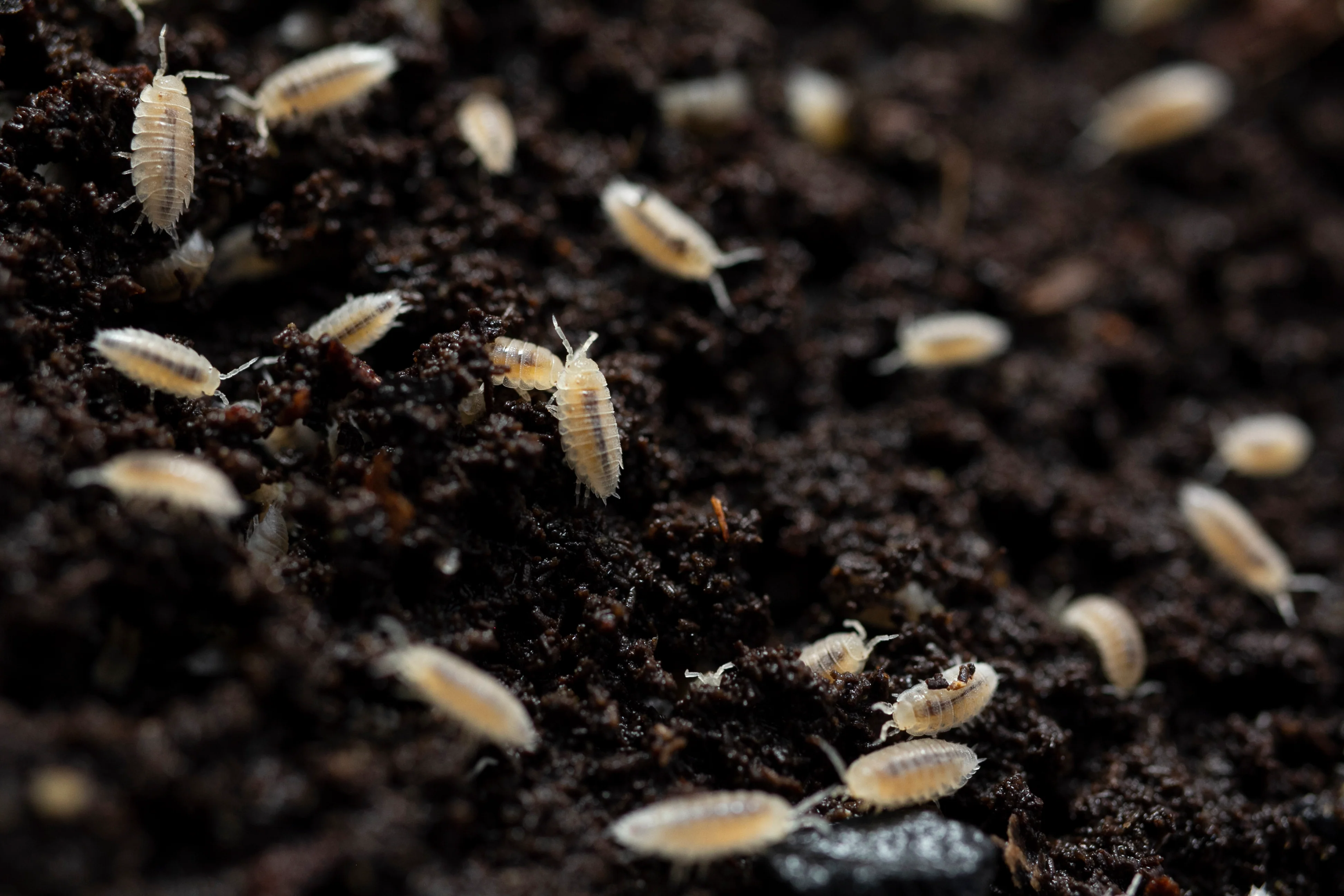
Pairing a bioactive living soil with a clean-up crew of small detritivores is one of the healthiest setups available for a ball python. Springtails and isopods live in the substrate alongside the snake and continuously break down waste, shed skin, and decaying plant matter, so the enclosure largely cleans itself between full substrate changes.
A living soil supported by a working clean-up crew is the closest captive husbandry comes to replicating the snake's real environment. In their native west African range, decomposers, leaf litter, and root systems cycle moisture and organic matter through the topsoil constantly. Recreating that loop in the enclosure produces more stable humidity, less mold, and far less ammonia smell than a sterile setup of the same age.
Common clean-up crew species:
- Tropical springtails (Folsomia candida): tiny, soft-bodied, handle mold and surface fungus
- Dwarf white isopods (Trichorhina tomentosa): thrive in consistently damp soil and stay out of the snake's way
- Powder Blue or Powder Orange isopods (Porcellionides pruinosus): hardier, faster-moving option if you want a more visible crew
Provide leaf litter and a few pieces of cork bark for the crew to hide and feed under, and keep one corner of the enclosure consistently damp. Avoid spraying the substrate with the reptile-safe disinfectants intended for paper-towel setups; they will wipe out the clean-up crew along with the microbes you are trying to remove.
Feeding Schedule
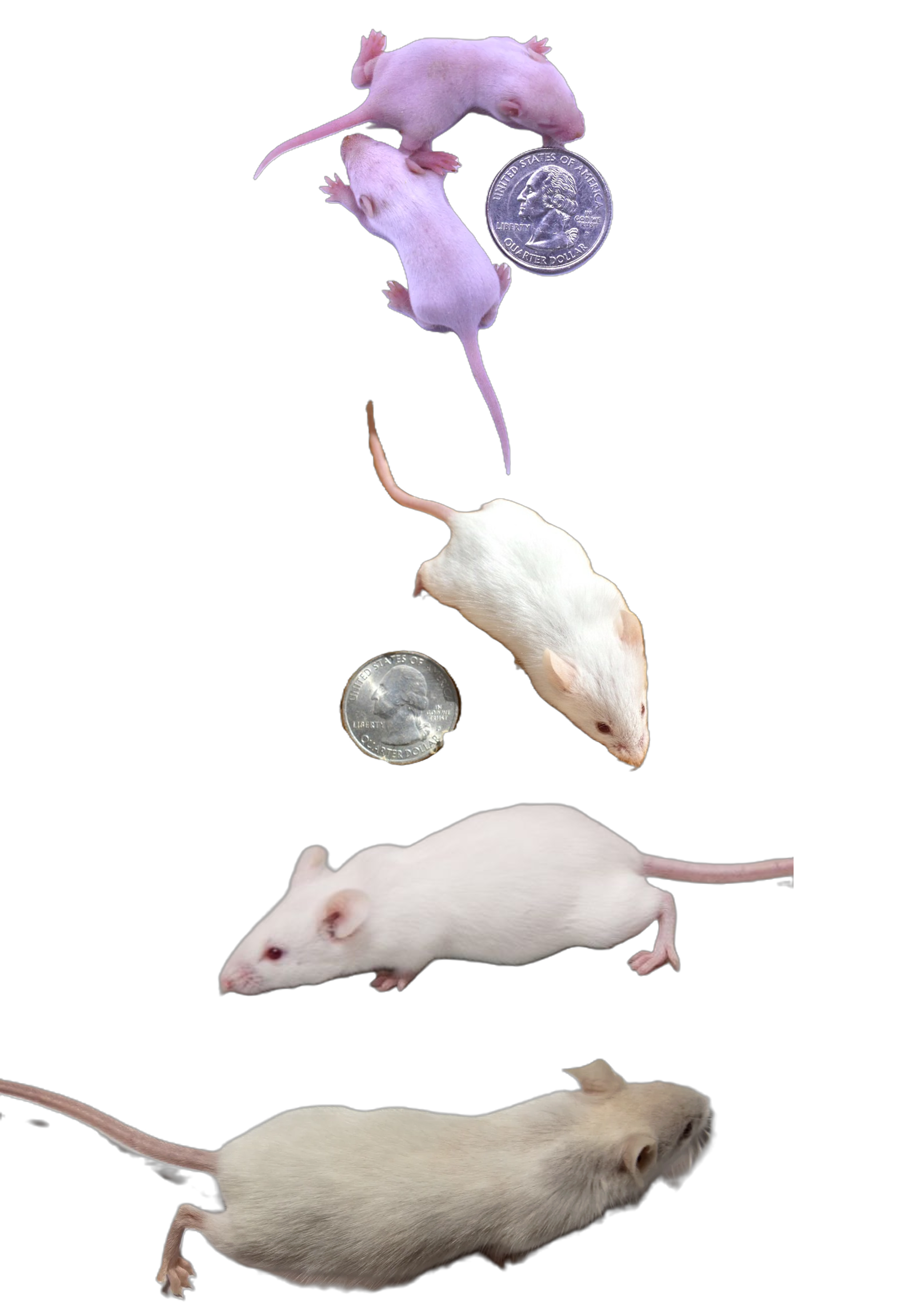
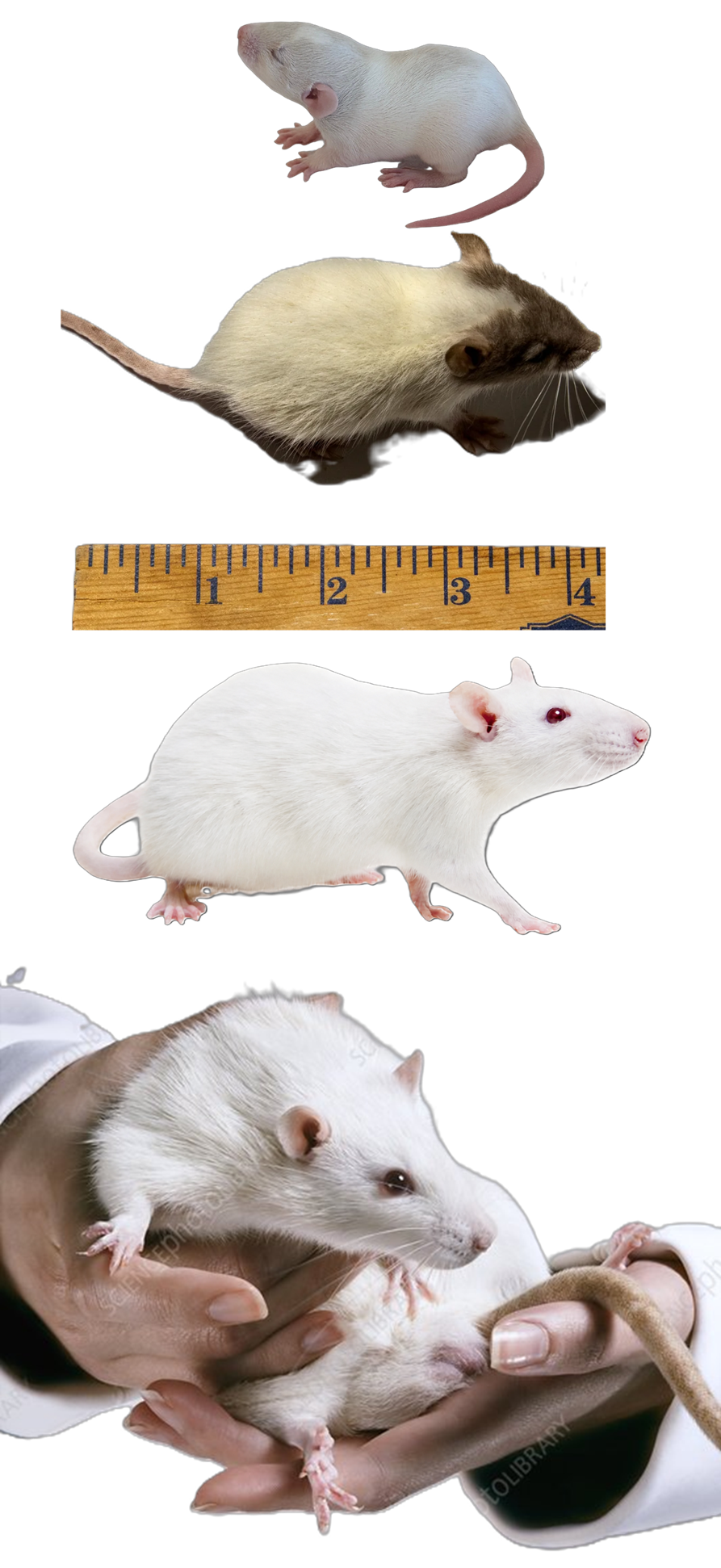
Feed appropriately sized, frozen-thawed rodents. Live prey is unnecessary for healthy ball pythons and introduces real risk of bites and infection. The prey item should be roughly the same girth as the widest part of the snake, never significantly wider.
- Hatchlings (0–6 months)
- Hopper mouse or small rat fuzzy every 5–7 days
- Juveniles (6–18 months)
- Weaned rat or small rat every 7–10 days
- Sub-adults (1.5–3 years)
- Small to medium rat every 10–14 days
- Adult males
- Medium rat every 14 days
- Adult females
- Medium to large rat every 10–14 days
Ball pythons are notorious for going off feed during winter months, breeding season, or after environmental changes. A healthy adult can comfortably skip several meals without weight loss. If a feeding refusal is paired with weight loss, soft body tone, or symptoms below, treat it as a husbandry or health issue rather than waiting it out.
Always thaw rodents in the refrigerator and warm them in warm water (not a microwave) until the head is clearly above body temperature, then offer with tongs. Never handle within 48 hours of feeding.
Water & Hydration
Provide clean, dechlorinated water at all times in a heavy bowl large enough for the snake to fully soak in. Place the bowl on the cool side; water on the warm side spikes humidity and accelerates bacterial growth.
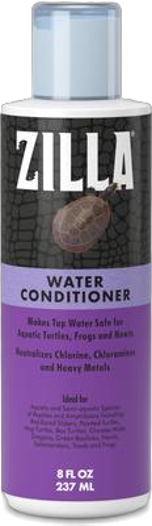
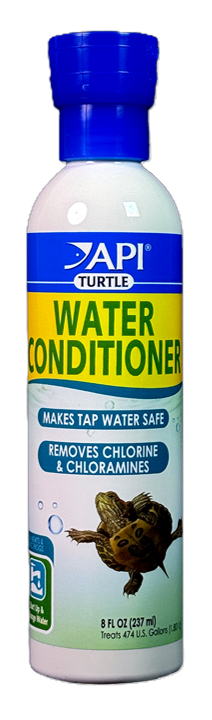
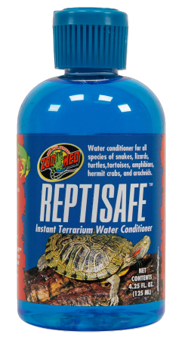
Most municipal tap water contains chlorine and chloramine that should be neutralized before going into the enclosure. Any of the reptile-grade water conditioners commonly stocked at pet stores will do this. Zoo Med ReptiSafe, API Stress Coat, and Zilla Reptile Water Conditioner are all widely available and dose at a few drops to a capful per gallon. Treat a fresh jug, label it, and use it as the snake's water supply.
Replace water at minimum every other day, and immediately after the snake defecates or soaks in it. Scrub the bowl weekly with hot water and a reptile-safe disinfectant. Persistent soaking can be a comfort behavior, but combined with visible dots between the scales, it is the most common sign of an external mite infestation.
Handling Guidelines
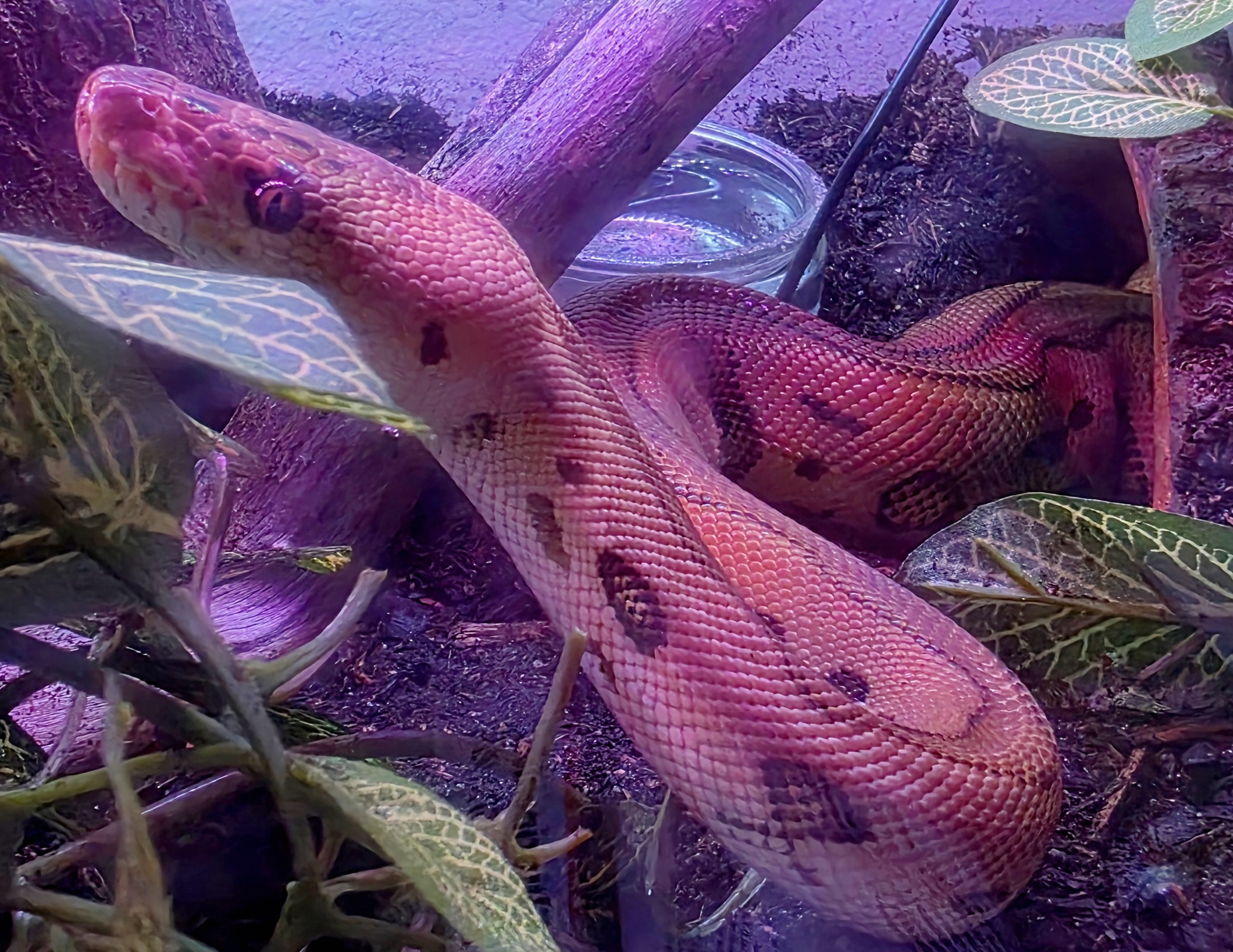
Ball pythons tolerate handling well once acclimated, but they are not a social species and do not seek contact. Handling should be calm, supportive of the body, and limited in duration, especially with new arrivals.
General rules:
- Wait at least 7–14 days after bringing a new snake home before handling
- No handling within 48 hours of a meal; it commonly causes regurgitation
- No handling during the blue/opaque phase of a shed cycle
- Support the body in two or more places at all times; never grab the neck or tail
- Keep sessions to 10–15 minutes for new or stressed animals; longer is fine for settled adults
- Wash hands before and after, and never handle other animals (especially other snakes or rodents) immediately beforehand
Common Health Issues & Warning Signs
Most ball python health problems trace back to husbandry: temperature, humidity, hygiene, or stress. Catching them early is the difference between a quick correction and a vet visit.
- Respiratory infection
- Open-mouth breathing, audible wheezing, mucus around the nostrils, or bubbles from the mouth. Verify temperatures immediately and consult a reptile vet.
- Scale rot
- Discolored, blistered, or pitted belly scales from chronic high humidity or wet substrate. Move to dry paper substrate and treat affected scales.
- Mites
- Tiny black specks on the snake or in the water bowl, persistent soaking, and rubbing against decor. Quarantine, treat with a reptile-safe miticide, and deep clean the enclosure.
- Stuck shed / retained eye caps
- Patchy shed, dull eyes after a shed completes, or constriction around the tail tip. Increase humidity, soak, and remove caps with a vet's help if needed.
- Mouth rot (infectious stomatitis)
- Pus, swelling, or pinkish discoloration around the mouth line. Requires veterinary treatment.
- Regurgitation
- Bringing up a partially digested meal hours or days after feeding. Stop feeding for at least two weeks, verify temperatures, and offer a smaller prey item next.
Cleaning & Maintenance Schedule
A predictable cleaning routine keeps the enclosure healthy and makes problems easy to spot. The exact cadence depends on substrate type and enclosure size, but the rhythm below works for most setups.
- Daily
- Refresh water, glance over temperatures, humidity, and the snake's body condition.
- Every 1–3 days
- Spot-clean any waste or shed pieces and remove soiled substrate.
- Weekly
- Scrub the water bowl, wipe down glass, and inspect hides and decor for damage.
- Every 4–6 weeks
- Full substrate change and a deep clean of the enclosure with reptile-safe disinfectant. Allow surfaces to dry completely before reassembly.
- Quarterly
- Replace or sanitize wood decor, recalibrate thermostats, and verify thermometers and hygrometers against a known-good probe.
If a question comes up that this guide does not answer, get in touch. Clearing husbandry questions before they turn into health problems is exactly the kind of conversation we are happy to have.
This guide reflects how we keep our own animals and is not a substitute for veterinary care. If you are seeing symptoms of illness, contact a qualified reptile veterinarian.
Individual Care Guides
Each topic from this guide broken out into its own detailed article.
How to set up a ball python enclosure correctly: sizing, hides, heat sources, ventilation, and the essentials for a secure, welfare-first habitat.
A detailed ball python feeding schedule by age and weight, including prey sizing, frozen-thawed preparation, feeding refusals, and nutritional considerations.
How to maintain proper humidity for ball pythons, recognize shed cycles, handle stuck sheds, and prevent humidity-related health problems.
Temperature gradient requirements for ball pythons: heat sources, thermostat control, surface vs. ambient readings, and nighttime drops.
Compare ball python substrate options: cypress mulch, coconut coir, aspen, reptile bark, bioactive soil, and paper towel. Pros, cons, and humidity ratings.
How to build a bioactive ball python enclosure from scratch: drainage layers, living soil, clean-up crews, plants, and long-term maintenance.
A guide to clean-up crews for ball python bioactive enclosures: species selection, colony establishment, feeding, and long-term maintenance.
Recognize common ball python health issues early: respiratory infections, scale rot, mites, stuck sheds, mouth rot, regurgitation, and when to see a vet.
How to handle a ball python safely: acclimation periods, body support, session length, stress signals, and handling rules for new snake owners.
Minimum and recommended enclosure sizes for ball pythons at every life stage: hatchlings, juveniles, sub-adults, and adult males and females.